New York Senior Food Assistance Programs: A Complete Guide to SNAP, Free Meals & Home Delivery
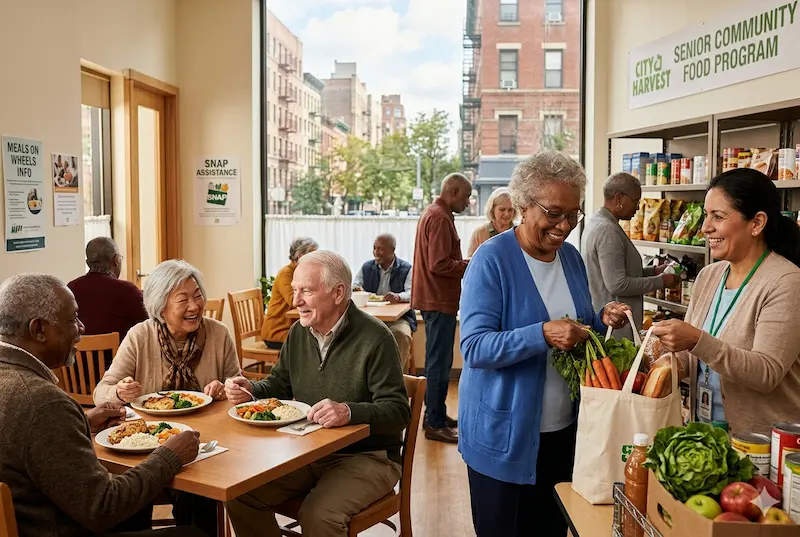
For older adults living in New York, NYC senior food programs are a critical resource — helping to reduce monthly grocery costs and support financial stability. With so many options available — from SNAP and free community meals to home-delivered meal services — it can be hard to know where to start. This guide covers the key NYC senior food programs available in 2026, so you can quickly find the help you need.
📋 Table of Contents
Overview of NY Senior Food Programs
New York State and New York City operate a wide range of programs to help seniors access nutritious, consistent meals. These programs span everything from grocery purchase assistance to fully prepared meals delivered right to your door.
Why These Programs Matter
- Easing the financial burden: Many seniors live on fixed incomes — food assistance helps stretch every dollar.
- Better nutrition: Balanced meals support overall health and help prevent chronic conditions.
- Social connection: Community dining programs reduce isolation and build friendships.
- Supporting independence: Home-delivered meals allow seniors with mobility challenges to stay nourished at home.
Types of Programs Available
New York’s senior food programs fall into three main categories:
- Grocery purchase assistance: Programs like SNAP provide monthly benefits you can use at the store.
- Prepared meals: Free or low-cost hot meals served at senior centers and community sites.
- Home delivery: Meals brought directly to seniors who have difficulty leaving home.
SNAP: A Complete Guide
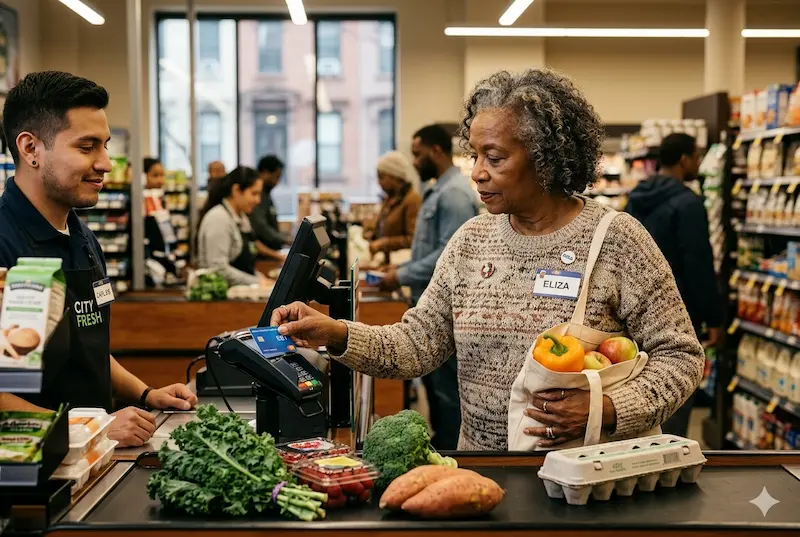
SNAP (Supplemental Nutrition Assistance Program) is a federally funded program that provides monthly benefits to low-income households for purchasing groceries. Formerly known as “Food Stamps,” benefits are now loaded onto an EBT card that works like a debit card at most grocery stores.
SNAP Eligibility Requirements (2026)
SNAP eligibility is based on both income and assets. Seniors (age 60+) qualify under more favorable rules than the general adult population.
| Household Size | Gross Monthly Income Limit (est.) | Net Monthly Income Limit (est.) |
|---|---|---|
| 1 person | ~$2,878 | ~$1,744 |
| 2 people | ~$3,607 | ~$2,348 |
| 3 people | ~$4,547 | ~$2,952 |
※ SNAP income limits are adjusted annually based on the Federal Poverty Level (FPL). Actual figures may vary depending on when you apply.
Special Benefits for Seniors
- Medical expense deduction: Out-of-pocket costs for prescriptions and medical equipment can be deducted from countable income.
- Higher asset limit: Households with a senior member may have up to $4,500 in assets (vs. $2,750 for general households).
- Simplified application: Some seniors can apply entirely by phone or online.
- Automatic recertification: Eligible seniors may not need to reapply every year.
Monthly Benefit Amounts
Your SNAP benefit is calculated based on household size, income, housing costs, and medical expenses.
| Household Size | Maximum Monthly Benefit (2026 est.) |
|---|---|
| 1 person | ~$291 |
| 2 people | ~$535 |
| 3 people | ~$766 |
How to Apply for SNAP in New York
- Online: myBenefits.ny.gov
- Phone: 1-800-342-3009 (interpreter services available)
- In person: Visit your local SNAP Center or HRA office
- By mail: Download and mail a completed application form
Documents You’ll Need
- Photo ID (driver’s license, passport, or state ID)
- Social Security Number (SSN)
- Proof of income (Social Security award letter, pension statements, etc.)
- Proof of housing costs (lease agreement, utility bills)
- Medical expense documentation (prescriptions, receipts)
- Bank statements (last 3 months)
Free Meal Sites & Community Dining Programs
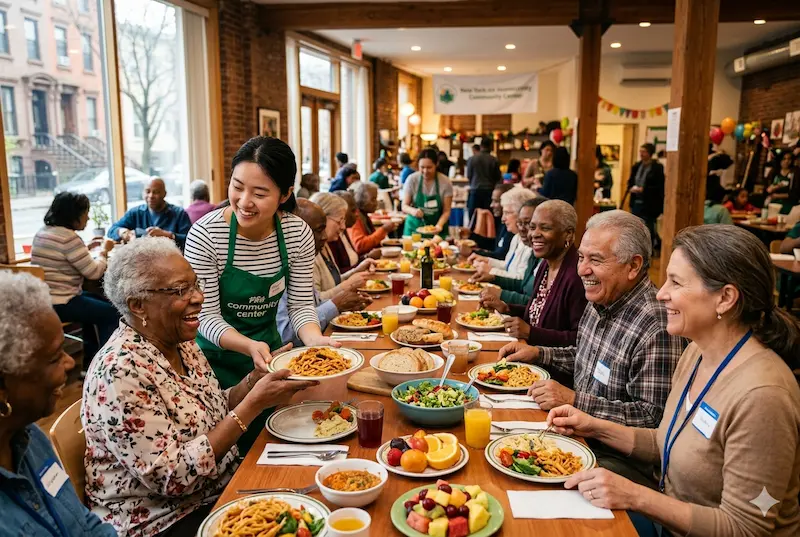
New York City runs an extensive network of community dining programs that offer seniors free or low-cost nutritious meals. Beyond just food, these programs serve as important social hubs — helping older adults stay connected to their communities.
Congregate Meals Program
Congregate meals are served at senior centers, community centers, and faith-based organizations throughout the city. Any New Yorker age 60 or older can participate at no cost.
- Who qualifies: Adults 60+ (spouses may attend regardless of age)
- Cost: Completely free (voluntary donations welcome)
- What’s served: Nutritionist-designed balanced lunches or dinners
- Added value: Access to social activities, health screenings, and educational workshops
Key Organizations Running Meal Programs
| Organization | Service Area | Highlights |
|---|---|---|
| NYC Dept. for the Aging (DFTA) | All five boroughs | Operates 250+ senior centers citywide |
| City Harvest | All five boroughs | Food rescue and distribution; supports meal programs |
| Food Bank For NYC | All five boroughs | Network of 1,000+ partner agencies |
| Borough Senior Centers | Manhattan, Brooklyn, Queens, Bronx, Staten Island | Includes Korean-American senior centers |
How to Access These Programs
- Find a nearby senior center: Call 311 or visit the NYC Aging website
- Most sites welcome walk-ins — no appointment needed
- Some centers recommend pre-registration
- No income or asset verification required
Meals on Wheels Home Delivery
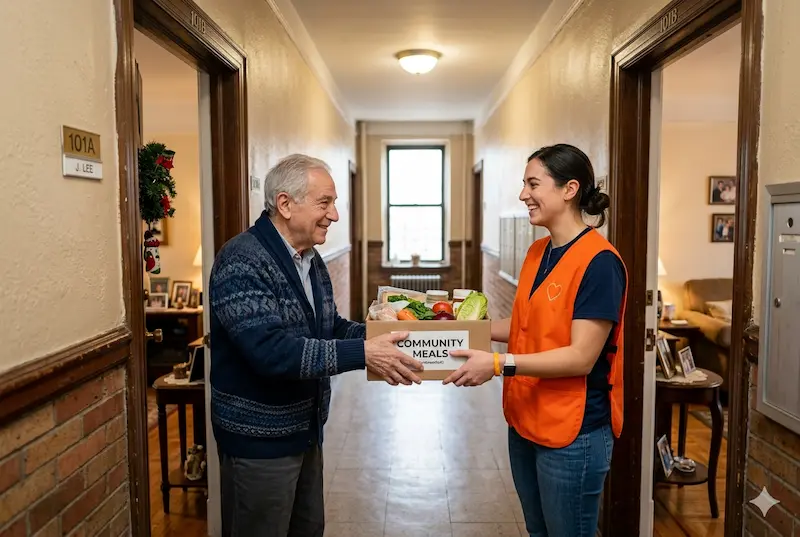
Meals on Wheels delivers nutritious meals directly to seniors who have difficulty leaving home. In New York City, this service operates under the Home-Delivered Meals (HDM) program administered by NYC Aging (DFTA).
Who Is Eligible
- NYC residents age 60 or older
- Have difficulty leaving home due to a physical condition or disability
- Unable to prepare their own meals
- No caregiver available to help with meals
- No income limit — open to all eligible seniors
Meal Options Available
| Meal Type | Description | Delivery Frequency |
|---|---|---|
| Hot Meals | Freshly prepared hot lunch | 5 days/week |
| Frozen Meals | Microwave-ready frozen meals | 1–2 bulk deliveries/week |
| Kosher / Halal Meals | Religiously compliant options | Available upon request |
| Special Diet Meals | Diabetic-friendly, low-sodium, etc. | Requires doctor’s order |
How to Apply
- Phone: Call 311 or your local senior center
- Online: NYC Department for the Aging (DFTA) official website
- Referral: A hospital, social worker, or family member can submit a referral on your behalf
- Assessment: After applying, you’ll receive a phone or in-person needs assessment
Cost
Meals on Wheels is free of charge, though voluntary contributions are appreciated. Higher-income seniors may be asked for a suggested donation, but ability to pay is never a barrier to service.
- Suggested donation: $2–$3 per meal
- No one is denied service due to inability to pay
- Medicaid recipients receive meals at no cost
Food Banks & Grocery Distribution Programs
Food banks and grocery pantries provide an essential safety net for seniors who need immediate food assistance. Many have minimal or no income requirements, making them an easy complement to SNAP benefits.
Major Food Bank Organizations
- Food Bank For NYC: The largest food bank in the city, with 1,000+ distribution partners
- City Harvest: Focuses on fresh produce; partners with senior programs throughout the city
- Community Food Pantries: Neighborhood-level pantries run by churches and nonprofits in every borough
How to Access a Food Pantry
- Search for your nearest location via 311 or the Food Bank For NYC website
- Most pantries only require a photo ID
- Typically available once a week or 1–2 times per month
- Some locations offer dedicated senior-only hours
Additional Nutrition Support Programs
Beyond the core programs, several supplemental options can further improve a senior’s nutritional well-being.
Senior Farmers’ Market Nutrition Program (SFMNP)
- Benefit: Vouchers to purchase fresh fruits and vegetables
- Who qualifies: Low-income adults age 60+
- Where to use: Participating farmers’ markets and farm stands
Commodity Supplemental Food Program (CSFP)
- Monthly USDA food package distributed once per month
- Includes canned goods, grains, and protein items
- Can be received alongside SNAP benefits
📌 Applying for multiple programs at the same time is not only allowed — it’s encouraged by New York City. If you need any level of support, don’t hesitate to reach out to 311 or your nearest senior center for help getting started.
📝 Today’s Summary
New York’s senior food programs work best when you combine them — stacking benefits means more support and less stress.
- SNAP: Monthly grocery benefits — the foundation of food assistance
- Community Dining: Free hot meals plus social connection
- Meals on Wheels: Essential for seniors who can’t easily leave home
- Food Banks: Immediate grocery support with few barriers
- Supplemental Programs: Fresh produce vouchers and monthly food boxes to round it all out
* This article is for informational purposes only and is not legal or financial advice. Program details may change — please verify with the relevant agencies.